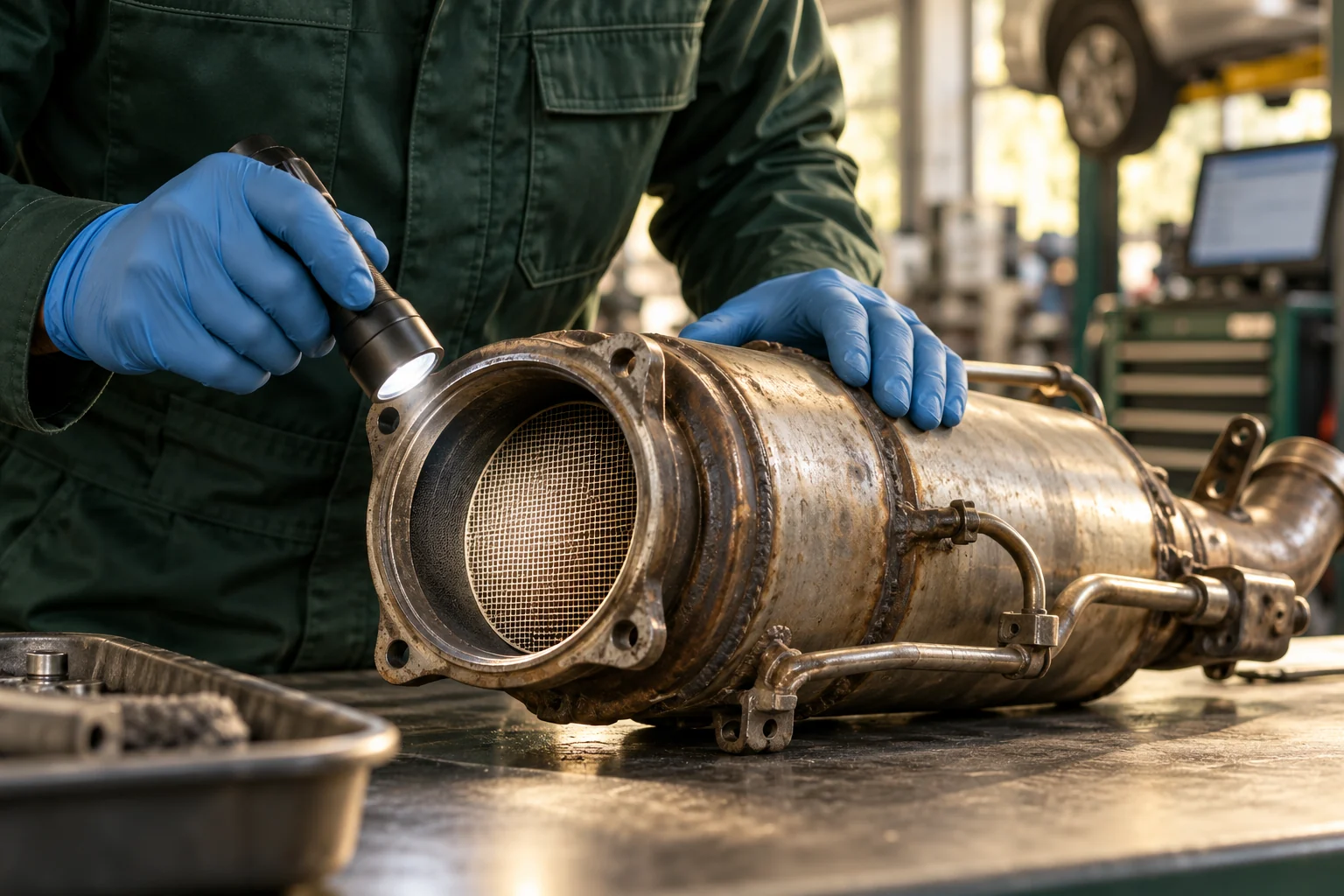
Your DPF catches soot in the exhaust stream. The vehicle normally burns much of it away through regeneration. Trouble starts when soot arrives faster than the system can deal with it, or when long-term ash build-up reduces capacity.
Short journeys and interrupted regeneration
A diesel used mainly for short, stop-start trips may not get the sustained conditions its regeneration system needs. Switching off during a cycle can leave it incomplete. Repeated interruptions can allow soot loading to increase. Each vehicle has its own instructions; use the handbook rather than a generic speed or engine-rev target.
A warning light is a clue, not a diagnosis
DPF warnings do not automatically mean that the filter itself is beyond recovery. The pressure-sensing system and other vehicle faults may affect regeneration or make the car report a problem. Ask a garage to read the fault codes, inspect the vehicle and interpret the readings in context.
Ash is different from soot
Regeneration leaves a non-combustible residue. Over time, ash occupies space in the filter and cannot be burned away by another regeneration. A longer drive is therefore not a universal solution. Off-vehicle cleaning or replacement may be needed, depending on the filter’s condition.
What to do next
- Record the warning, symptoms and any recent repair history.
- Follow the vehicle handbook and seek advice for persistent or serious symptoms.
- Have your garage diagnose the cause before arranging removal.
- If the removed filter is suitable, discuss specialist cleaning.
General information, not a vehicle diagnosis. Sources: HELLA technical guidance and Ford owner guidance. Instructions vary by model.
Share your vehicle and filter details for a cleaning quote.
Get a cleaning quote